RESEARCH UNIT
Green Hydrogen Energy Systems (GHES)
Mission
Our mission is to advance the science, engineering, and deployment of integrated green hydrogen energy systems that enable deep decarbonisation and resilient, renewable-based energy infrastructures. The GHES Research Group develops and demonstrates innovative solutions spanning hydrogen production, storage, and utilisation, coupled with renewable energy, thermal, and electrical systems across multiple sectors. Through experimental platforms, advanced modelling, and techno-economic analysis, we aim to improve efficiency, durability, safety, and cost-effectiveness of hydrogen technologies while supporting their real-world integration. We foster interdisciplinary collaboration with academia, industry, and policymakers to accelerate sustainable energy transitions, inform regulatory frameworks, and train the next generation of hydrogen specialists. Our work contributes to energy security, climate neutrality, and the emergence of viable hydrogen markets in Cyprus, Europe and beyond.
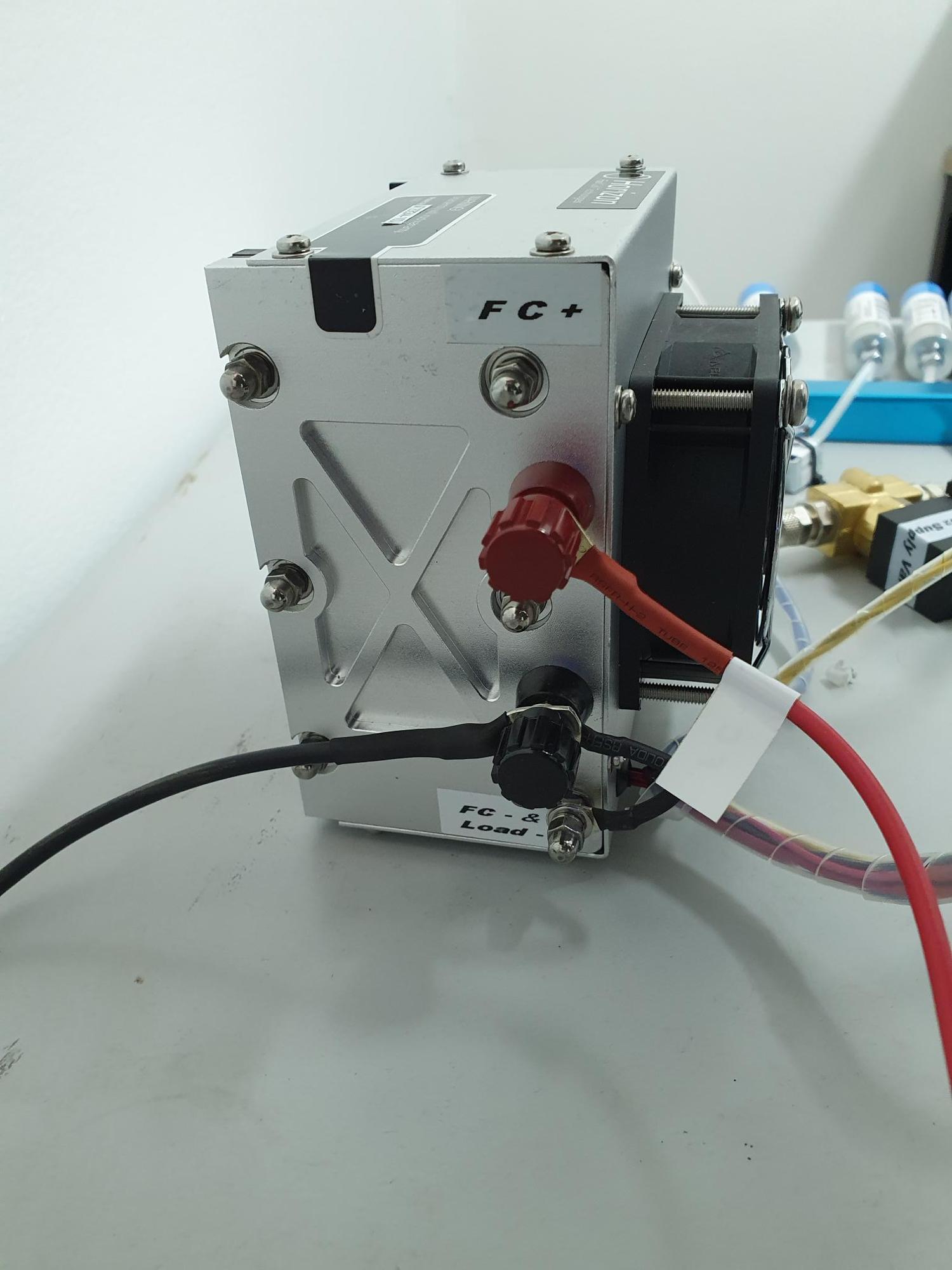
Key Research Focus Areas
The GHES Research Group focuses on the development, integration, and deployment of advanced green hydrogen technologies across the full value chain; from renewable-powered hydrogen production to end-use applications in energy, industry, and transport. Our research emphasises system-level optimisation, real-world validation, and pathways to commercialisation.
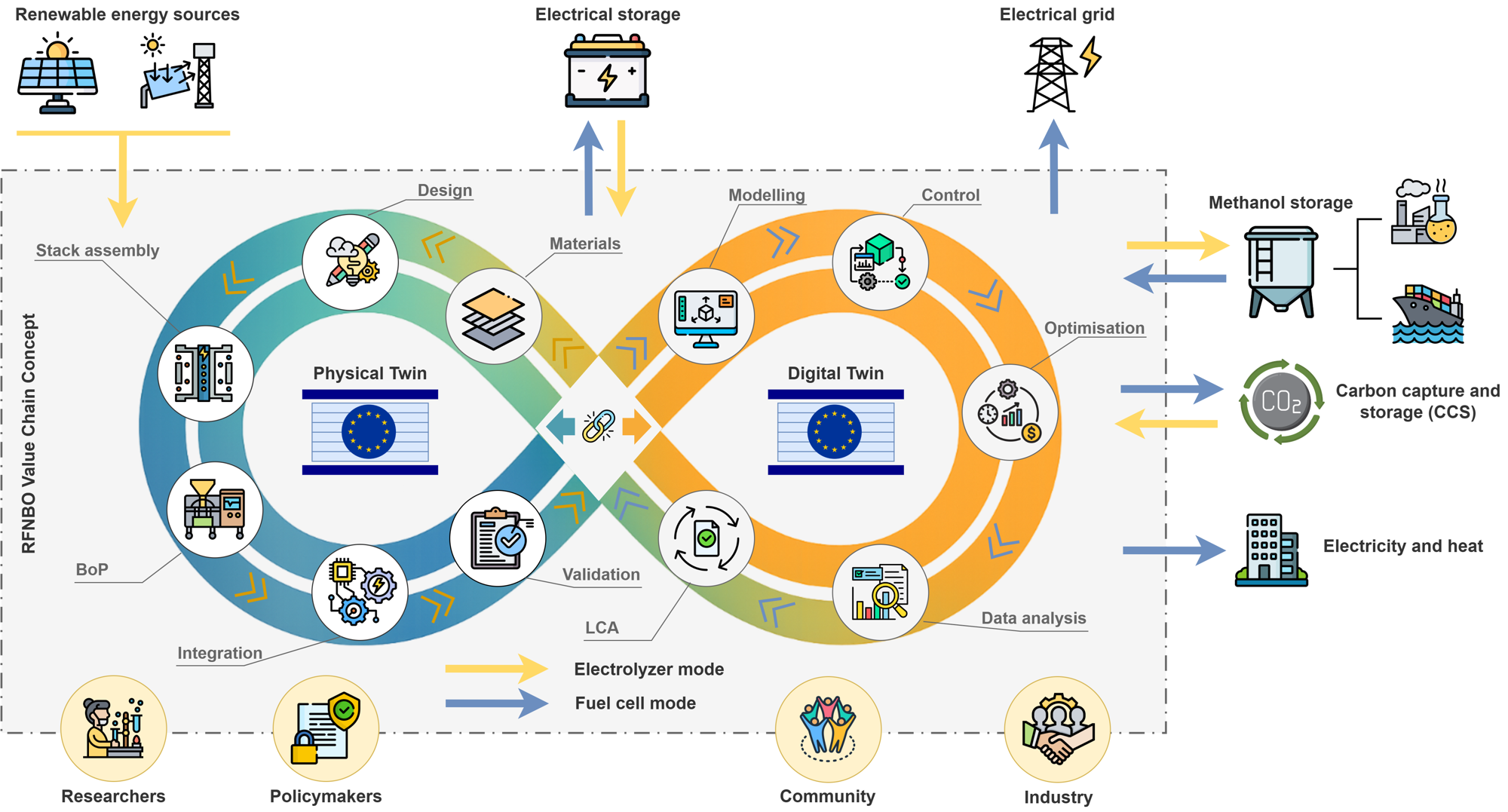
Integrated hydrogen energy systems. We design and optimise holistic energy systems that couple electrolysers, hydrogen storage, and fuel cells with renewable energy sources (e.g. solar PV), batteries, and thermal technologies. Emphasis is placed on multi-vector integration (electricity, heat, cooling) and advanced energy management strategies to maximise efficiency, flexibility, and self-sufficiency in decentralised and grid-connected applications.
Advanced modelling and optimisation. The group focuses on advanced modelling, dynamic simulation, and stochastic optimisation, to enhance the operation and planning of green hydrogen-based energy systems.
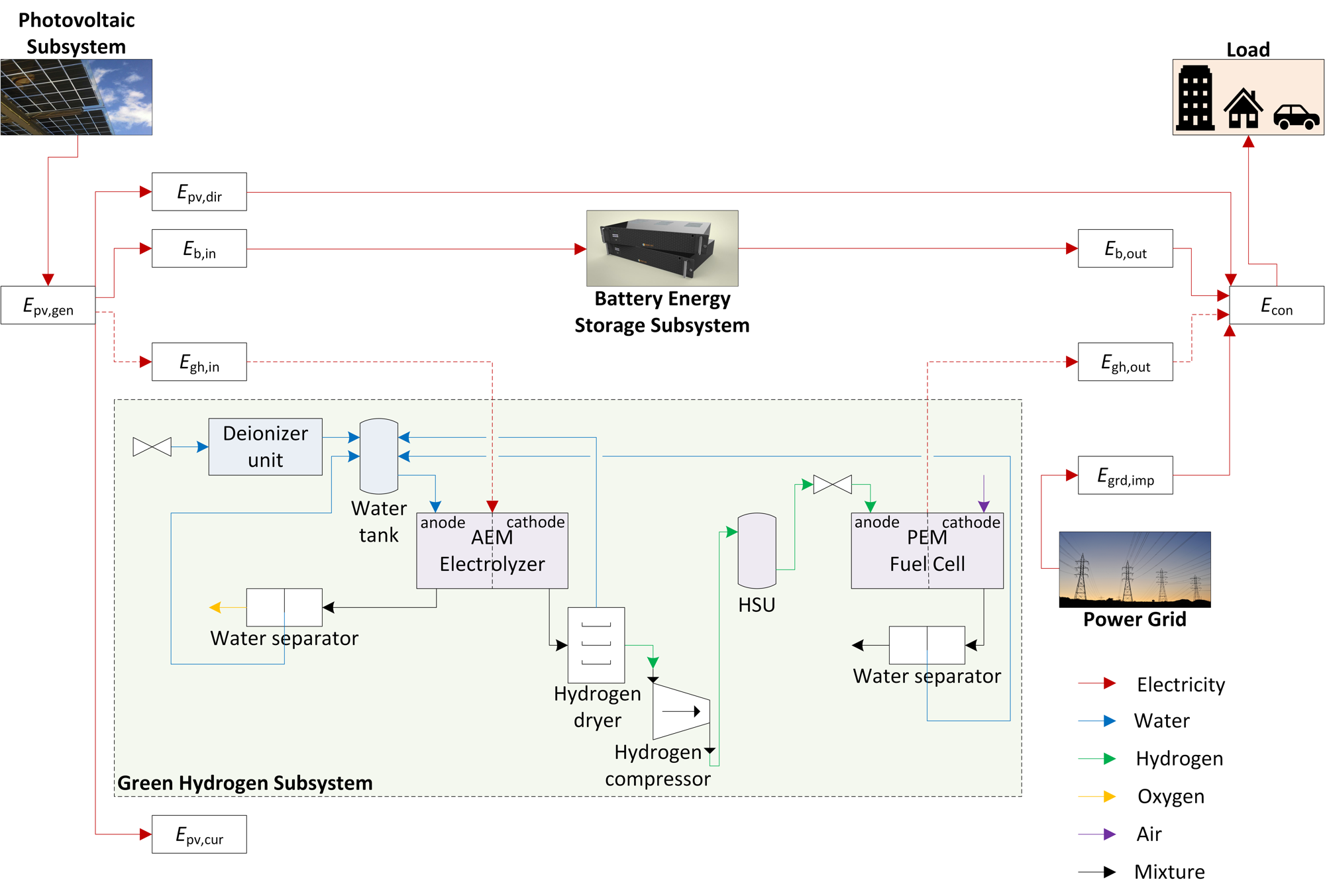
Renewable integration and microgrids. We develop green hydrogen microgrids and distributed energy systems capable of high autonomy and resilience. Research includes optimal sizing, control, and operation under variable renewable input, sector coupling in buildings and communities, and hydrogen-based long-duration energy storage for seasonal balancing and uninterrupted power supply (UPS).
Hydrogen storage modelling and system integration. The group develops and assesses hydrogen storage solutions encompassing compressed hydrogen, metal hydrides, and hydrogen-based carriers and derivatives (e.g., green methanol and green ammonia). Work addresses system integration, pressure and safety considerations, and techno-economic trade-offs across stationary and transport applications.
Hydrogen applications and sector coupling. We explore hydrogen use across industry, transport, and the built environment, including power-to-hydrogen-to-X pathways (fuels, heat, power). This includes industrial decarbonisation, heavy-duty mobility, and building-integrated hydrogen energy systems.
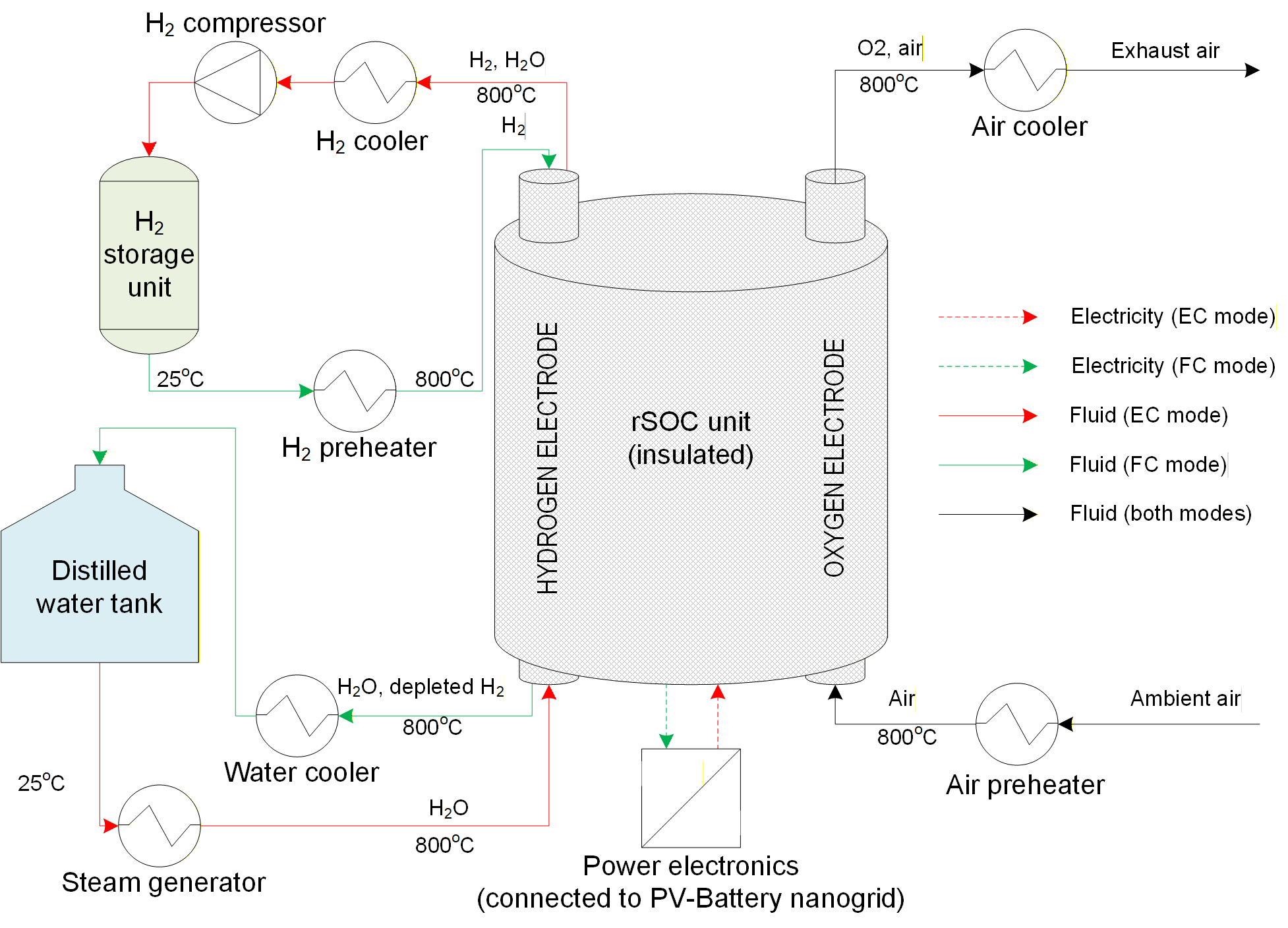
Advanced electrolysis and fuel cell technologies. We investigate next-generation hydrogen conversion devices, including anion exchange membrane, proton exchange membrane, and solid oxide electrolysers and fuel cells, with particular focus on reversible solid oxide cell (rSOC) systems. Research targets efficiency maximisation, life cycle cost minimisation, practical and realistic operational configurations, and improved durability under dynamic operation.
Techno-economic and sustainability assessment. We perform life cycle, environmental, and economic analyses of hydrogen technologies and systems, identifying cost drivers, performance limits, and market opportunities. Studies support optimal deployment strategies, policy design, and investment decisions aligned with net-zero and EU Green Deal objectives.
Demonstration, infrastructure, and policy support. We aim in the establishment of experimental platforms and pilot-scale facilities for hydrogen production and utilisation, enabling technology validation and integration studies. We collaborate with industry and policymakers to inform standards, and national hydrogen strategies, supporting the emergence of hydrogen valleys and hydrogen economy.
Selected projects
Recent work
Selected recent journal papers
Books
Team members