

Research Group
Building Energy Systems and Technologies
Advancing net-zero energy buildings and urban energy systems through innovative, integrated and smart multi-energy-vector solutions.
Mission
Buildings are evolving into active, flexible components of energy systems through electrification, digital monitoring, distributed energy resources, energy storage, and intelligent control.
The mission of the Building Energy Systems and Technologies Group is to accelerate the transition toward net-zero carbon buildings and urban energy systems through innovative and integrated energy technology solutions. Our research develops advanced methods for designing and operating building energy systems that combine renewable energy generation, heating and cooling technologies and multi-energy storage solutions.
By integrating physics-based modelling, data-driven methods, and real-world experimental validation, we aim to improve the efficiency, flexibility and resilience of buildings and districts. The group aims to contribute to evidence-based policy development and industry innovation, supporting stakeholders in making informed decisions about energy technologies, investment strategies and regulatory frameworks. Through collaboration with international research partners, industry and policymakers, we deliver scalable solutions that enable sustainable buildings, smarter energy infrastructure and climate-neutral cities.
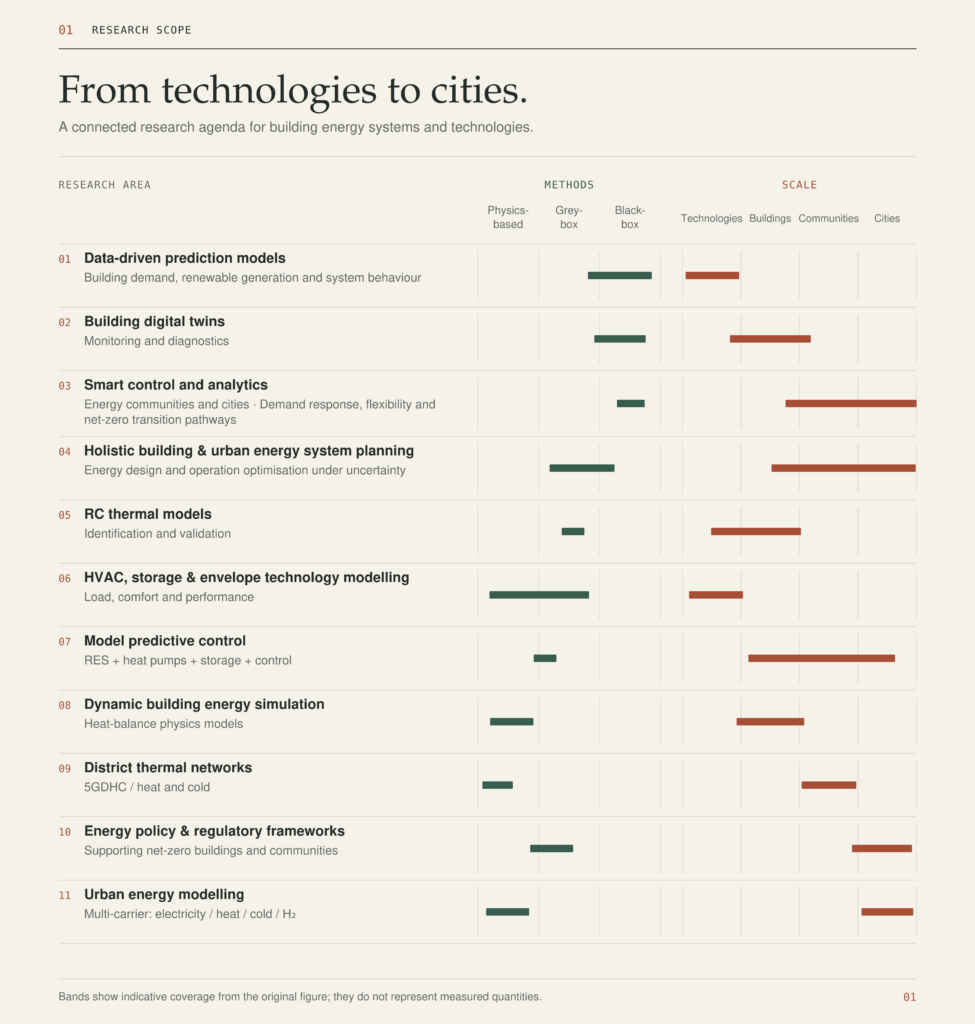
The group’s own methods-and-scale framework — spanning individual technologies through to buildings, communities and cities.
Key research focus areas
The group’s research spans four connected areas — from system-level planning down to the technologies themselves — understanding and improving the performance of buildings as part of broader energy systems.
Holistic building and urban energy system planning
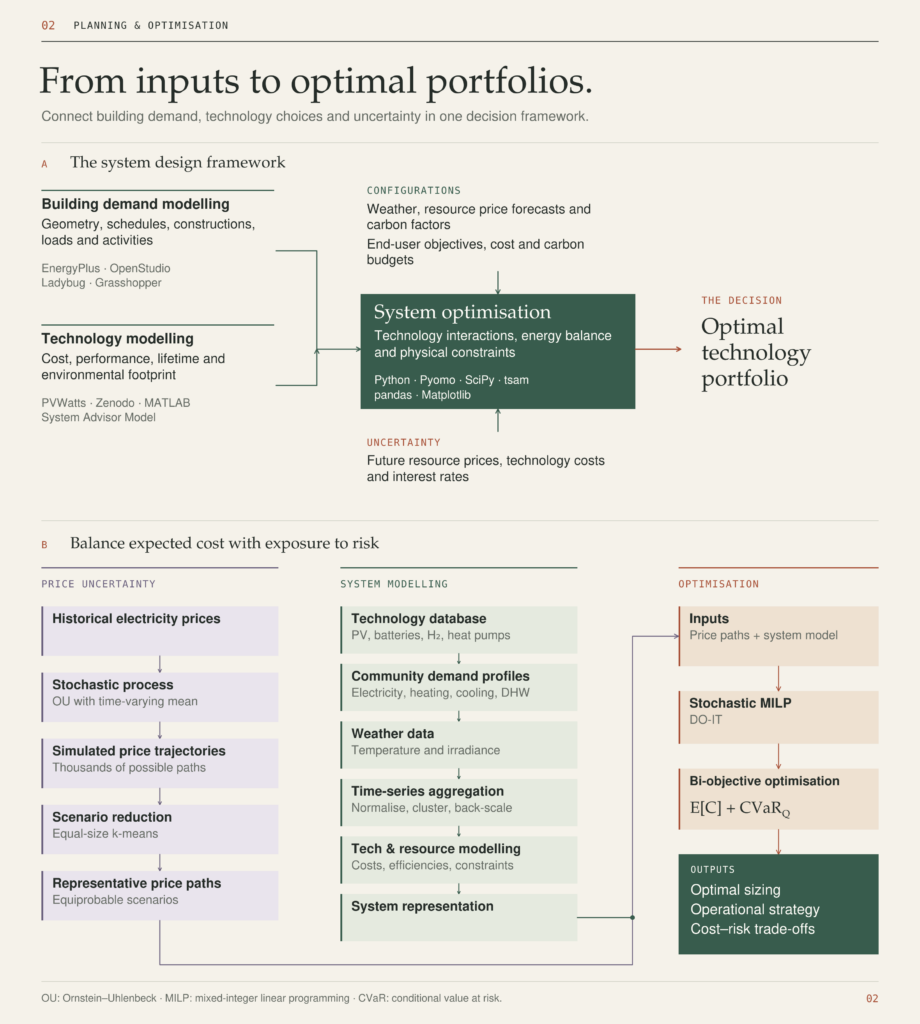
The group develops decision-support frameworks for the integrated planning of building and urban energy systems, adopting a multi-energy-vector perspective in which electricity, heating, cooling and emerging carriers such as hydrogen are analysed simultaneously within unified modelling environments.
These frameworks support the long-term planning of building stocks, campuses, districts and energy communities — evaluating distributed renewable generation, electrification of heating and cooling, and cross-vector energy storage under uncertainty in climate, prices, technology costs and regulation.
Dynamic building energy modelling
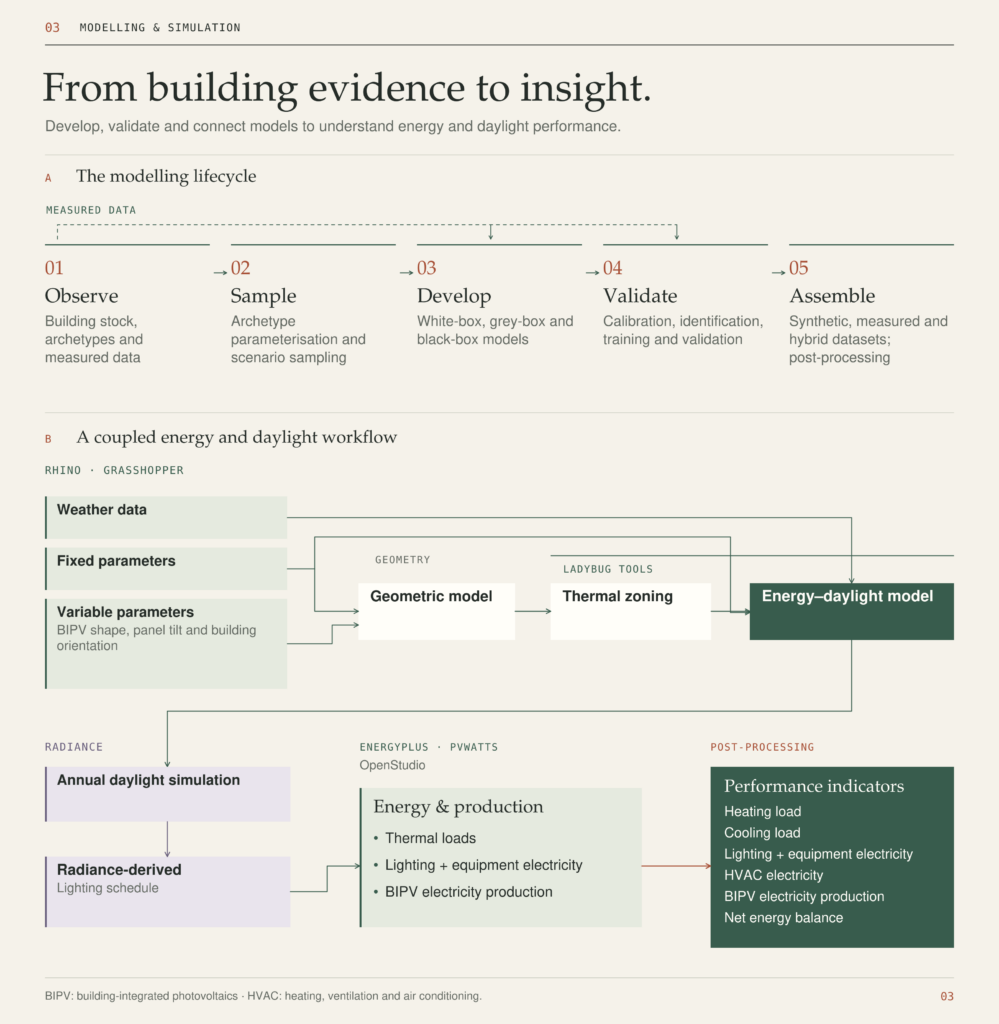
The group develops advanced building energy modelling methodologies capable of representing the dynamic thermal and energy behaviour of buildings — combining high-fidelity physics-based simulation with reduced-order grey-box models and data-driven techniques derived from operational data.
Data-driven methods, including statistical and machine-learning techniques, enable system identification from measured data and adaptive operation of buildings and districts, supporting robust prediction of electricity, heating and cooling demand across multiple spatial and temporal scales.
Optimal control and operational digital twins
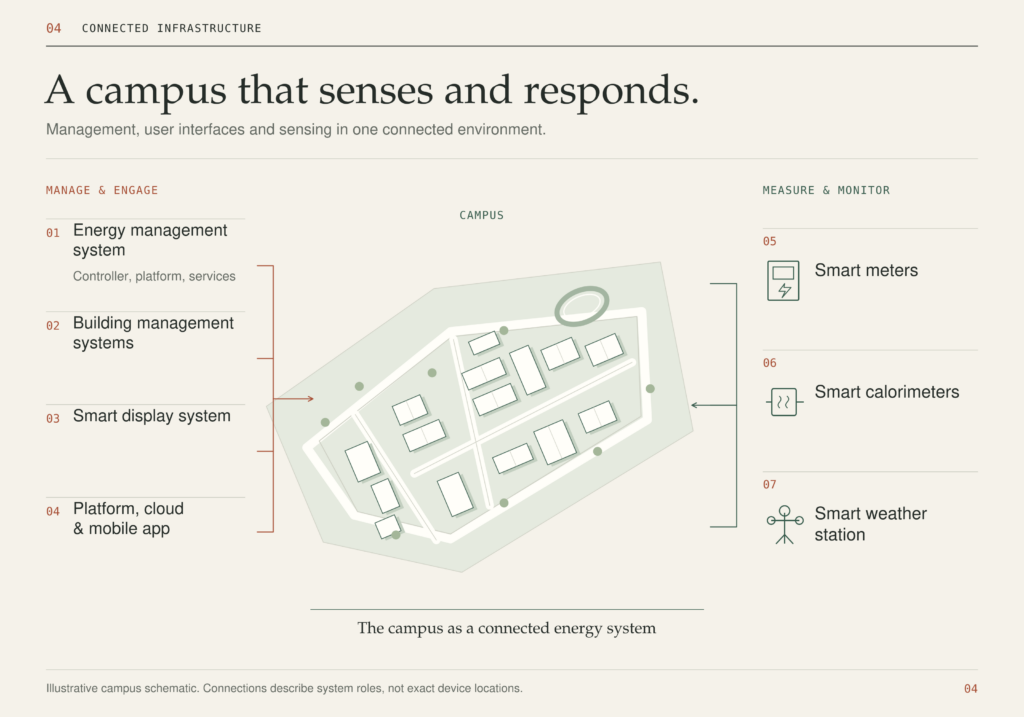
The group develops advanced control and monitoring strategies for integrated building energy systems, combining real-time data acquisition, predictive modelling and optimisation-based control to enable intelligent operation of HVAC systems, renewable generation and energy storage.
Model predictive control and machine-learning forecasting anticipate variations in weather, demand and renewable generation, supporting digital twins that integrate sensor data, simulation and optimisation for continuous performance monitoring and demand-side flexibility.
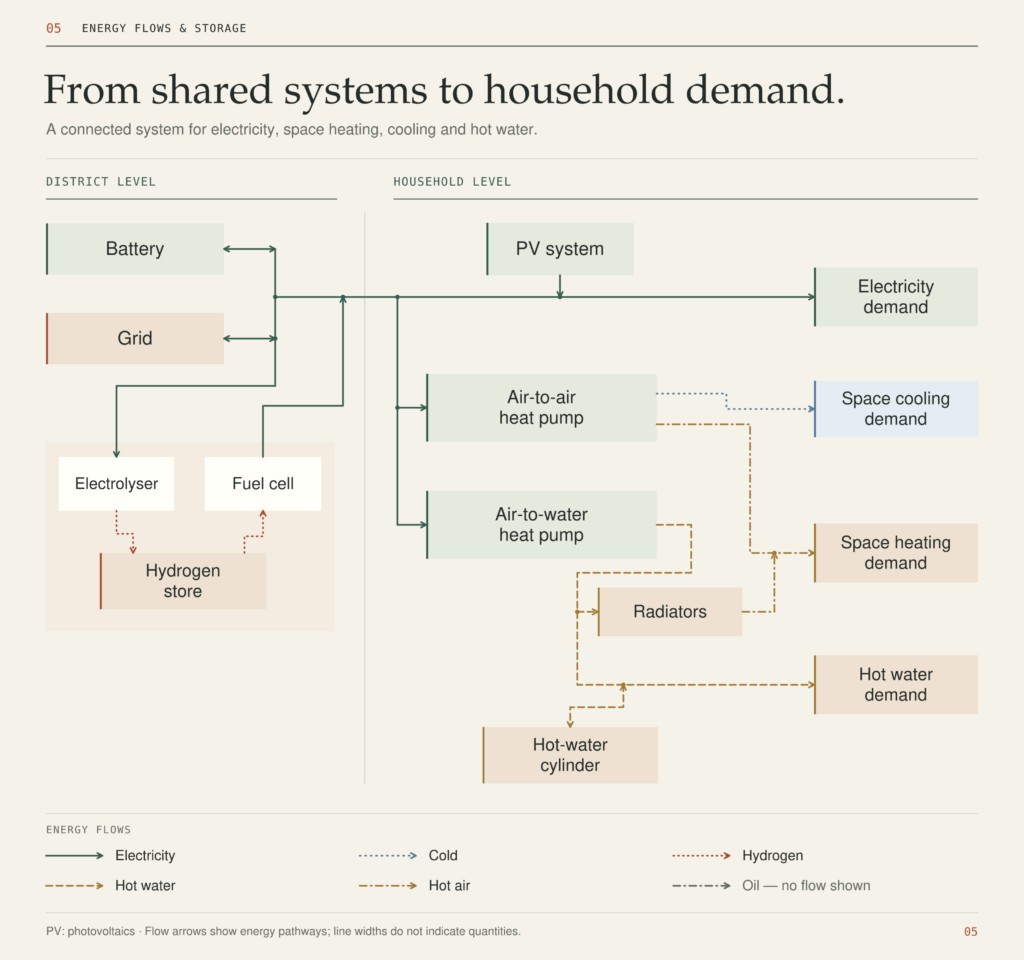
Novel energy technology integration
The group investigates the integration of emerging energy technologies — heat pumps, photovoltaic systems, thermal and electrical storage, hybrid renewables and hydrogen — within integrated system optimisation frameworks rather than in isolation.
Through optimisation, techno-economic assessment, policy analysis and experimental validation, the group evaluates configurations that improve system efficiency, reduce emissions, enhance flexibility and support climate-neutral buildings and districts.
Mentorship and international collaboration
The group benefits from external scientific mentorship strengthening its research capacity in zero-energy buildings, advanced building energy systems, digital twins, and smart energy management, while supporting international collaboration and knowledge exchange.
The group also welcomes visiting researchers and students from leading international institutions, creating opportunities for joint research, training and collaboration in building energy modelling, energy system optimisation, digital twins, and integrated low-carbon technologies.
Scientific mentor to the group, contributing expertise in zero-energy buildings and advanced building energy systems.
Recent work
Selected journal articles, conference papers, and datasets from the group.
Team members

Andreas V. Olympios
Group Leader
PhD, Imperial College London. Designs and operates smarter, low-carbon energy systems for buildings and districts, with emphasis on heating, cooling and whole-energy system planning. 45+ publications; editor and reviewer for several journals and funding bodies.

Fanourios Kourougianni
PhD Researcher
Integrated master’s, Mechanical Engineering, NTU Athens. PhD student in Mechanical and Manufacturing Engineering at UCY and Researcher at PHAETHON CoE, focused on building energy modelling, optimisation, and green hydrogen integration.
Mechanical Engineer
Integrated master’s, Aristotle University of Thessaloniki, specialising in Industrial Engineering. Experience in HVAC system design, site supervision, and data-driven workflows for preventive maintenance and inventory tracking.

PhD Candidate
BSc, Mechanical and Manufacturing Engineering, UCY. PhD candidate at PHAETHON CoE researching energy systems modelling, thermal energy storage, and district energy systems.


