

RESEARCH UNIT
Data analytics for PV-storage and RES integrated systems
Intelligent monitoring systems incorporating data analytics for efficient maintenance and reliable performance of solar plus storage assets.
Mission
Our mission is to optimize the performance, operation, and integration of solar powered, battery integrated systems. The group leverages measurement data from distributed solar installations, weather stations, sensors, electric vehicle (EV) stations, and storage assets to support real-time monitoring and supervision, predictive maintenance, energy forecasting, energy flows optimization, and fault detection. Its goal is to enhance the efficiency, reliability, and cost-effectiveness of PV-battery and hybrid RES systems, enabling smarter grid operations and smoother integration of renewables and EVs at both local and system levels. We foster interdisciplinary collaboration with academia and industry to accelerate the energy transition. Our work contributes to energy security and climate neutrality.
Key Research Focus Areas
The Group focuses on advancing the integration of RES, such as solar PV and energy storage systems (ESS), into electric grids. The unit addresses the technical, economic, and operational challenges of connecting variable, decentralized energy sources with existing energy infrastructure, aiming to improve grid stability, resilience, and reliability as the share of renewables increases dominating the power supply. Research activities span system modelling and simulation, fault diagnostics and forecasting, health-state analytics, performance assessment, smart energy management, power flow optimization. It includes the development of novel strategies for balancing supply and demand, managing grid congestion and EV charging process, and ensuring energy security while enabling the transition to low-carbon energy systems.
Major R&D priorities
Interoperability framework: Establishing guidelines for PV, battery, and EV system observability, management, control, and grid services. Develop interoperable interfaces.
Monitoring and control of assets: Implementing advanced monitoring and control techniques for supervision of RES systems.
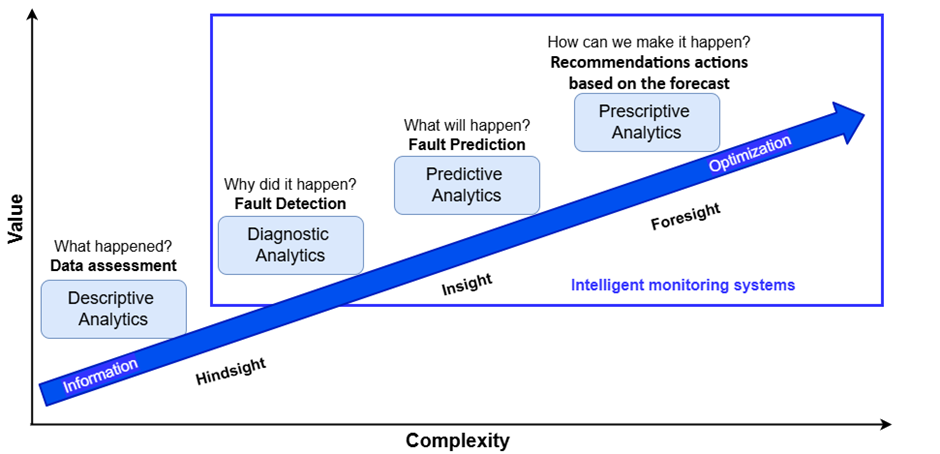
Fault diagnostics, health-state analytics, and forecasting: Developing health-state monitor along with fault diagnosis and forecasting algorithms, utilizing machine learning models for improved classification and forecasting accuracies.
Predictive models: Developing digital twin models, advanced modelling techniques and fault detection algorithms to identify operational problems, systemic issues, and faults in RES systems. Operational-state monitor to detect failures/losses.
PV generation, EV demand and load forecasting: Developing forecasting algorithms for short-term prediction of solar generation and load demand.
Performance loss algorithms, reliability models and decision support system: Develop trend-based performance loss algorithms for quantifying losses and estimating degradation rate. Develop soiling extraction algorithms. Estimate energy losses and evaluate the criticality of incidents (e.g., faults) using an analytical cost-based method. Implement reliability models for PV modules and inverters to predict the likelihood of equipment breakdown. Implement preventive and predictive maintenance strategies. Develop a decision support system (by integrating the developed algorithms) for maintenance, prioritization of mitigation actions and follow up.
Control strategies and energy management system: Develop optimisation controller to optimise power flows. Develop EMS for smart energy management, balancing supply and demand, managing grid congestion, smart EV charging, and for ensuring energy security while enabling the transition to low-carbon energy systems.
Energy trading and ancillary service business models: Derive and demonstrate novel energy trading and vehicle-to-grid (V2G) services. Develop business models for smart EV/battery charging.
Selected projects
Recent work
Selected journal papers
Team members